Payment Gateway vs Payment Processor: Clear Guide for Small Businesses
Payment Gateway vs Payment Processor: Clear Guide for Small Businesses
Confused about payment gateways vs payment processors? Learn the real difference in plain language and see how Coastal Pay bundles both to simplify your fees.
Read Times:697
Share
If you have ever tried to set up card payments, you have probably heard terms like “gateway” and “processor” thrown around as if they are the same thing. They are not, and mixing them up can lead to extra vendors, surprise fees, and support headaches. This clear guide breaks down how each piece works, then shows how Coastal Pay combines them so you can take payments with less cost and less confusion.
How a card payment flows from customer to merchant – and where Coastal Pay sits in that chain.
Let’s Define the Two Parts of Online Card Payments
Every card payment involves two separate jobs happening in sequence. Most business owners only see the end result – money in the bank – but understanding both jobs helps you choose the right provider, control your costs, and resolve problems faster when they arise.
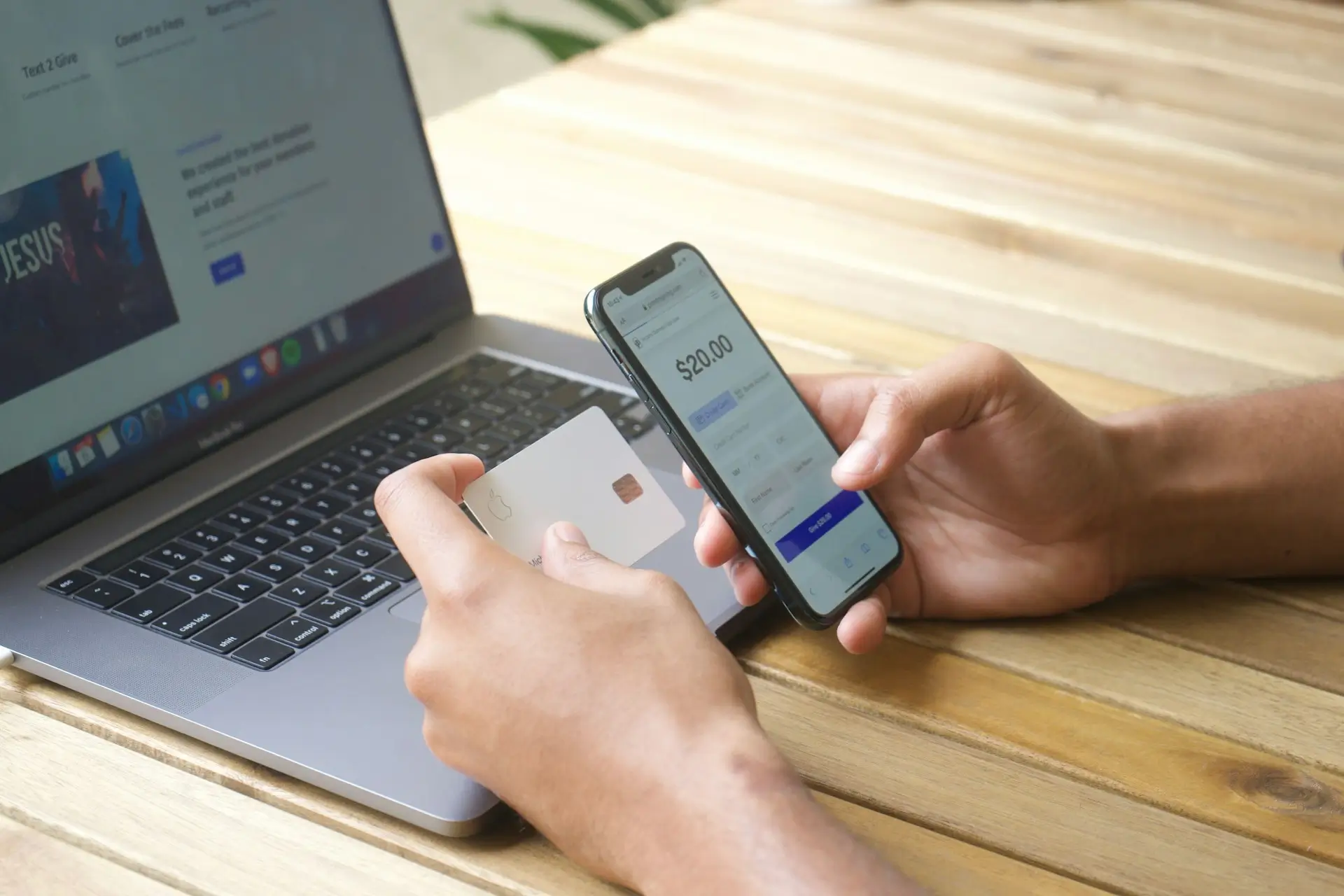
A payment gateway is the secure digital “card terminal” that captures your customer’s payment details and passes them safely to the next step. Think of it as the front door of a transaction. When a customer types their card number into an online checkout, taps their phone at a terminal, or clicks a payment link in an invoice, the gateway is what receives that data, encrypts it, and sends it along. It handles the customer-facing security layer, including tokenization and fraud checks, so sensitive card information never travels in plain text.
A payment processor is the back-office engine that takes what the gateway sends and actually moves the money. It routes the transaction through the appropriate card network – Visa, Mastercard, American Express – gets an approval or decline from the customer’s bank, and then settles the funds into your merchant account on a regular schedule, usually the next business day.
A simple analogy: when you swipe a card at a physical store, the card reader is acting like a gateway – capturing and transmitting the data. The bank and card networks working behind the scenes to approve and move the funds are acting like the processor. Both parts have to work for a payment to complete.
Here’s How the Money Actually Moves in a Card Sale
Seeing the full transaction journey end to end makes it much easier to understand why both a gateway and a processor are necessary, and where Coastal Pay fits in.
Step 1 – Customer enters payment details. A shopper types their card number, expiration date, and CVV into your checkout page, taps their contactless card, or uses Apple Pay or Google Pay. At this point, the payment gateway captures the data.
Step 2 – The gateway encrypts and transmits. The gateway immediately tokenizes the card data, replacing sensitive numbers with a secure token that has no value outside the transaction. It then sends this encrypted package to the payment processor. This is where PCI compliance and fraud screening tools operate – protecting your customer and reducing your liability at the same time.
Step 3 – The processor routes to the card network. The processor forwards the transaction details to the relevant card network – Visa, Mastercard, or another – which routes the request to the customer’s issuing bank.
Step 4 – The issuing bank approves or declines. The customer’s bank checks available funds, spending limits, and fraud indicators, then sends an approval or decline response back through the same chain in seconds.
Step 5 – Settlement to your account. Approved transactions are batched and settled, typically overnight, with funds deposited into your merchant account. The processor handles this settlement process and deducts fees before depositing the net amount.
Coastal Pay handles both the gateway layer (Coastal Pay Gateway supports card and ACH flows, payment links, email invoicing, and tap to pay) and the processor layer (authorization, settlement, and merchant account funding) under one relationship.
What’s the Real Difference Between a Gateway and a Processor?
Now that you have seen how they work together, here is a side-by-side breakdown of what makes each one distinct.
What a payment gateway does:
Captures card details from the customer at checkout, on a terminal, or via a payment link
Encrypts and tokenizes sensitive payment data before transmission
Runs fraud screening and 3-D Secure checks
Maintains PCI compliance for data in transit
Communicates the transaction securely to the processor
What a payment processor does:
Routes transactions through Visa, Mastercard, or other card networks
Requests authorization from the customer’s issuing bank
Returns an approval or decline to the gateway
Manages batch settlement and funds transfer to the merchant account
Percentage of sale + per-transaction fee; monthly account fees
Risk and support contact
Gateway provider for checkout issues, fraud tools, and tokenization
Processor for chargebacks, disputes, and funding delays
Coastal Pay example
Coastal Pay Gateway – included at no extra cost
Coastal Pay processing – 2.5% + $0.15 flat rate
Some vendors are gateway-only (like Authorize.Net or NMI). Others are processor-only, working through banks and acquirers. Coastal Pay combines both under a single contract, single statement, and single support team.
Here’s What Small Businesses Really Care About: Cost, Control, and Risk
The gateway-versus-processor distinction is not just academic. It has direct implications for what you pay, who you call when something goes wrong, and how much paperwork you manage.
Cost. Using a separate gateway provider and a separate processor means paying two sets of fees. A standalone gateway often costs $10 to $25 per month plus a per-transaction fee, stacked on top of your processor’s percentage and fixed fee. With Coastal Pay, the gateway is included at no additional cost. The entire relationship is priced at a flat 2.5% + $0.15 per transaction, so you can calculate your exact monthly cost without hunting through two separate statements.
Control. When your gateway and processor are separate vendors, changing one often affects the other. Switching processors while keeping the same gateway requires re-certification. Switching gateways may require re-integrating with your e-commerce platform or POS. With a bundled provider like Coastal Pay, you have one integration, one contract, and one point of contact for any changes.
Risk and compliance. PCI compliance responsibilities are split between the gateway (data in transit) and the processor (data at rest and settlement). Managing those responsibilities across two vendors creates gaps. Coastal Pay supports merchants through PCI compliance as a single provider, and its gateway layer handles tokenization and fraud screening so card data is protected from the first moment of capture. Coastal Pay also offers dual pricing and surcharging programs that can eliminate credit card processing costs entirely for eligible merchants.
How Does This Change if You Sell In-Store, Online, or Both?
The gateway and processor dynamic looks slightly different depending on how and where you take payments.
In-store only. If you use a physical POS terminal or card reader, the terminal itself acts as the gateway – it captures and encrypts card data at the point of interaction. The processor still handles authorization and settlement on the back end. A retail store running Coastal Pay as its processor connects directly through any of the 2,000+ compatible POS systems, with Coastal Pay managing the processing layer underneath. Visit Coastal Pay’s Retail solutions page for more detail on compatible POS setups.
Online only. An e-commerce store needs a software-based gateway to capture card data at checkout. Coastal Pay Gateway integrates with platforms like Shopify, WooCommerce, and BigCommerce, handling encryption and fraud screening before passing transactions to Coastal Pay’s processing infrastructure. See Coastal Pay’s E-Commerce page for integration options.
Omnichannel (in-store and online). This is where a bundled gateway-and-processor model becomes especially valuable. Merchants with both a physical location and an online store often struggle with fragmented reporting when their in-store terminal and online gateway belong to different providers. Coastal Pay’s centralized management dashboard consolidates transactions from POS terminals, online checkout, email invoicing, payment links, and tap-to-pay into one reporting view. For enterprises managing multiple locations or brands, this visibility is a meaningful operational advantage. Explore Coastal Pay’s Enterprise solutions for multi-location setups.
Here’s How Coastal Pay Bundles Gateway and Processing for You
Coastal Pay is a registered ISO/MSP with Wells Fargo and Axiom Bank, which means it operates as both a gateway provider and a processing partner – not a middleman reselling another company’s infrastructure. That matters because it gives Coastal Pay direct control over pricing, support, and integration quality rather than depending on a third-party relationship to resolve your issues.
Here is what the bundled setup looks like in practice. When a customer places an order on your WooCommerce site, the Coastal Pay Gateway captures and encrypts their card details, passes the transaction to Coastal Pay’s processing layer, receives the authorization from the card network, and returns a confirmation to your checkout page – all in seconds. Funds settle to your merchant account on a standard schedule, and every transaction appears in your Coastal Pay dashboard alongside in-store, invoice, and payment link activity.
For merchants who want to offset or eliminate card processing costs entirely, Coastal Pay’s dual pricing program is available as part of the same integrated setup, with no additional gateway configuration required.
Instant boarding gets most merchants approved and ready to accept payments in under two minutes. There is no long-term contract required to get started.
What Should You Ask Before Choosing a Provider?
Whether you are setting up payments for the first time or comparing Coastal Pay to your current provider, these questions will help you evaluate any vendor fairly.
Questions to ask any payment provider:
Do you provide both the gateway and the processing, or will I manage two separate vendors? Coastal Pay provides both under one contract and one support line.
What is the total monthly cost including gateway fees, processing fees, and any account fees? With Coastal Pay, the answer is straightforward: 2.5% + $0.15 per transaction, with no separate gateway fee.
What are your contract terms and early termination fees? Coastal Pay does not require a long-term contract to get started.
How do you handle chargebacks and disputes, and who do I contact? With a bundled provider, there is one team handling both gateway and processing disputes.
How quickly are funds deposited into my account? Ask for the standard settlement timeline and whether same-day or next-day funding is available.
Do you support alternative payment methods like Apple Pay, Google Pay, ACH, and buy now pay later options? Coastal Pay supports all of these through the same gateway and processing relationship.
Do you offer dual pricing, surcharging, or cash discount programs? Coastal Pay’s dual pricing program is available to eligible merchants and can reduce or eliminate card processing costs.
What software and POS systems do you integrate with? Coastal Pay connects to 2,000+ software vendors and POS systems across all major industry types.
If a provider cannot answer most of these questions clearly and in writing, that is worth noting before you sign anything.
Next Steps to Simplify Your Payments With Coastal Pay
Here is the short version: a payment gateway is what captures and protects your customer’s card data; a payment processor is what authorizes the transaction and moves the funds into your account. Most businesses need both, and managing them as two separate relationships adds cost, complexity, and friction. Coastal Pay combines both into one platform so you get a single rate, a single integration, and a single team to call when you need support.
If you are ready to simplify your payment setup, get started with Coastal Pay in under two minutes. Instant boarding means most merchants are approved and processing the same day. If you would prefer to talk through your current setup first, call Coastal Pay at 888-266-1715 and a specialist can review your existing gateway and processor costs and show you what the bundled model would look like for your business.
For related reading, explore Coastal Pay’s blog posts on mobile payments, cash discounting, and dual pricing to get a fuller picture of how these programs work together as part of a single payment strategy.
Frequently Asked Questions
What is the real difference between a payment gateway and a payment processor?
A payment gateway captures and encrypts your customer’s card details at checkout and transmits them securely to the processor. A payment processor routes the transaction through the card networks, gets approval from the customer’s bank, and settles funds into your merchant account. The gateway handles the customer-facing security layer; the processor handles the back-end money movement. Coastal Pay provides both under one contract and one flat rate.
Do I need both a payment gateway and a payment processor?
Yes, for most standard card payment setups you need both. The gateway is required to securely capture and transmit card data, and the processor is required to authorize and settle the transaction. Some providers – including Coastal Pay – bundle both into a single relationship so you do not have to manage them separately or pay two sets of fees.
Can I use a different gateway with my existing processor?
In many cases, yes – but it depends on which processor and gateway you are using, and whether they are certified to work together. Mixing vendors adds complexity, can create support gaps, and often results in additional fees for both the gateway and the processor. Choosing a provider like Coastal Pay that handles both eliminates that risk.
Is Coastal Pay a gateway, a processor, or both?
Coastal Pay is both. It provides the Coastal Pay Gateway for card and ACH payments, payment links, email invoicing, and tap to pay – with no separate monthly gateway fee – as well as the processing infrastructure for authorization, settlement, and merchant account funding. As a registered ISO/MSP with Wells Fargo and Axiom Bank, Coastal Pay controls both layers directly.
How much does a payment gateway cost separately from processing?
Standalone gateway providers typically charge between $10 and $25 per month plus a per-transaction fee of $0.05 to $0.10, on top of whatever your processor charges. Coastal Pay includes gateway access at no additional monthly cost as part of its flat 2.5% + $0.15 per-transaction pricing, which means your effective rate reflects the true all-in cost rather than a gateway-inflated total.
If you are trying to add or update a payment gateway on your website and need hands-on help, Coastal Pay’s support team can walk you through every step. This guide shows you exactly how to reach the integration support team by phone, email, and helpdesk so you can get your integration live and taking payments fast.
If you are trying to add or update a payment gateway on your website and need hands-on help, Coastal Pay’s support team can walk you through every step. This guide shows you exactly how to reach the integration support team by phone, email, and helpdesk so you can get your integration live and taking payments fast.
If you are searching for a payment processor that will “never hold your funds without reason,” you are really asking for one thing: no nasty surprises with your cash flow. In this article, we explain when and why processors pause payouts, why no honest provider can promise zero holds, and how Coastal Pay is built to reduce surprise fund freezes with clear policies, upfront underwriting, and real human support when things get complicated.
If you are asking whether there is a payment gateway that does not charge a monthly gateway fee, the answer is yes – several major providers do not charge one, and Coastal Pay is one of them. In this guide we break down how Stripe, Square, PayPal and Coastal Pay each handle fees, then show you exactly how Coastal Pay’s $0/month gateway and flat 2.5% + $0.15 pricing stack up for real businesses at real volumes.