
Why Payment Processors Hold Funds (and How to Reduce Your Risk)
A fund hold is one of the most disruptive events a business can experience. One morning your processor’s dashboard shows a notice that funds from the last week, or month, or longer are being reviewed and withheld. Payroll is scheduled for Friday. Supplier payments are due. The hold notice does not give you a timeline or a clear path to resolution. This guide explains exactly why holds happen, which processor models are most likely to trigger them, what you can do proactively to reduce your risk, and how Coastal Pay’s true merchant account structure compares to the PayFac platforms where most holds originate.

Best Payment Processor APIs for Developers in 2026: Stripe, Adyen, Braintree, Square, and Coastal Pay
Choosing a payment API is one of the highest-leverage technical decisions a development team makes. The wrong choice means rebuilding the payment layer 18 months later when rate increases, account instability, or missing features become blocking issues. In this guide, we compare the five most-evaluated payment processor APIs in 2026 – Stripe, Adyen, Braintree, Square, and Coastal Pay – across the dimensions that actually matter to development teams: documentation quality, tokenization and PCI scope, webhook reliability, SDK coverage, ACH support, and total processing cost at volume.
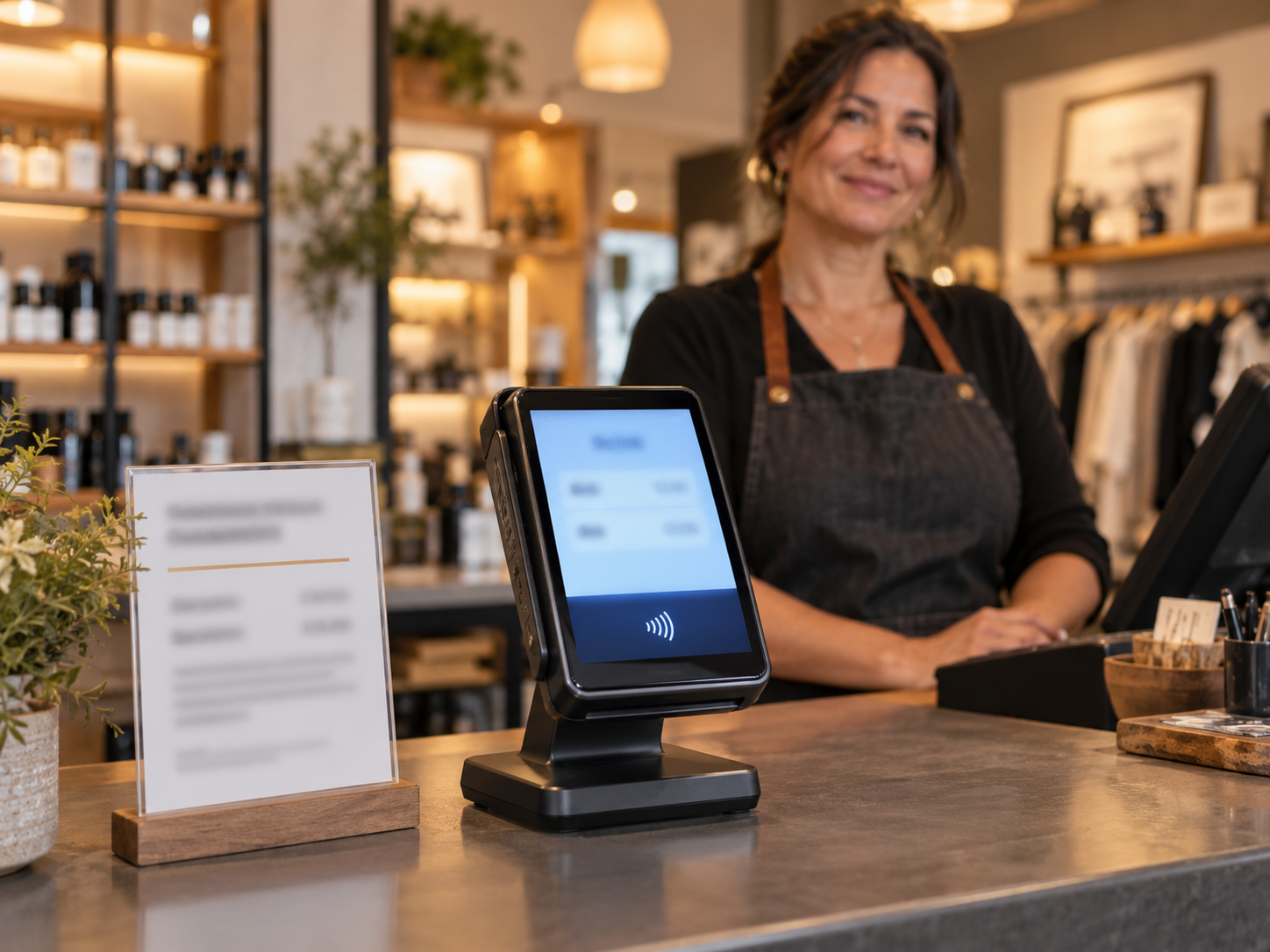
Retail POS With Instant Surcharging Approval | Coastal Pay
Card processing fees are one of the largest controllable costs in retail. Surcharging lets you shift those fees to card-paying customers – legally, transparently, and without replacing your POS. Coastal Pay approves most standard-risk U.S. retail merchants in approximately 2 minutes and configures a fully compliant surcharging or dual pricing program across your existing POS in the same business day.

Instant E-Commerce Merchant Approval in 2 Minutes | Coastal Pay
Most e-commerce payment processing applications take days. Bank reviews, document requests, manual underwriting queues, provisional accounts with limited functionality. Coastal Pay’s instant boarding gives most standard-risk U.S. e-commerce merchants a fully approved account in approximately 2 minutes – not provisional, not pending review, not limited mode. Approved. Processing-ready. Same day.

Quick Payment Links by Coastal Pay – Send a Secure Payment URL in Seconds
No website. No code. No hardware. No waiting. Coastal Pay’s Quick Payment Links let you generate a secure, shareable payment URL from your dashboard in under 60 seconds and send it to your customer via text, email, or anywhere else. They click, they pay, you’re done. Flat 2.5% + $0.15 per transaction. $0 monthly fee.

How to Switch Payment Processors Without Rebuilding Your Website
The most common reason businesses stay with a payment processor they have outgrown is the fear that switching means rebuilding their website checkout from scratch. In most cases, this fear is unfounded. For the majority of e-commerce sites built on standard platforms, switching processors is a plugin swap or a gateway credential update – completable in hours, not weeks, with no website rebuild required. This guide maps every switching path for every common website type, and shows how switching to Coastal Pay works specifically for your platform.

Enterprise Retail Chains Trust Coastal Pay for Multi-Location Payment Processing
Running a retail chain means every payment decision multiplies. A $25/month gateway fee at 1 location is nothing. At 50 locations, it is $15,000/year before a single transaction. A processing rate 0.4% above market at $100,000/month per location is $4,000/year. At 20 locations, $80,000/year. Coastal Pay is built for retail chains that understand this math and want the lowest flat rate, $0 gateway fee, unified multi-location management, and the flexibility to keep their existing POS without rebuilding it around a new processor.

Most Reliable Payment Processors for Secure Phone Orders in 2026
Phone order payment processing is not the same as standard e-commerce. The customer is on the line, your staff is live, and an authorization failure, slow response, or technical outage becomes a customer service incident in real time. In this guide, we break down what “reliable” and “secure” actually mean for MOTO (Mail Order Telephone Order) processing in 2026, and show how Coastal Pay handles the specific challenges of phone-forward businesses from service companies and legal firms to B2B order desks and healthcare billing teams.

Best Virtual Terminals in 2026: Square vs Stripe vs Coastal Pay
If your business takes card payments over the phone, processes mail orders, or needs a browser-based way to charge customers without a physical terminal, you need a virtual terminal. In this guide, we compare the three most commonly evaluated options – Square, Stripe, and Coastal Pay – across rates, monthly cost, PCI compliance, recurring billing, ACH availability, and which is the right fit depending on your business type and volume.

Most Cost-Effective Payment Processors for Mid-Sized Retail Chains in 2026
For a single-location retailer, a 0.4% difference in processing rate costs $40/month at $10,000 in volume – manageable. For a 10-location chain processing $500,000/month, the same rate gap costs $2,000/month, $24,000/year. At 50 locations processing $2,500,000/month, it is $100,000/year. Payment processing cost management is not a back-office detail for retail chains – it is a P&L line item that compounds with scale. In this guide, we identify the most cost-effective processors for mid-sized retail chains in 2026 and show how Coastal Pay stacks up at real chain-level volumes.

Top Payment Processors With No Long-Term Contracts in 2026
Signing a multi-year payment processing contract is one of the costliest mistakes a small or mid-size business can make – and one of the easiest to avoid. In this guide, we compare the top payment processors with no long-term contract requirements in 2026, explain what to look for beyond the “no contract” headline, and show how Coastal Pay’s terms compare to Square, Stripe, and PayPal when you read the actual fine print.

Best Payment Gateways for a Completely Frictionless Checkout in 2026
Cart abandonment is not a marketing problem – it is a checkout problem. When customers drop off at the payment step, the issue is almost always friction: too many fields, a redirect away from the page, a mobile form that doesn’t work, or a payment method the customer prefers that isn’t available. In this guide, we break down what actually causes checkout friction, which gateway features eliminate it, and how Coastal Pay compares to Stripe, Braintree, and Adyen for businesses that need the smoothest possible checkout experience in 2026.
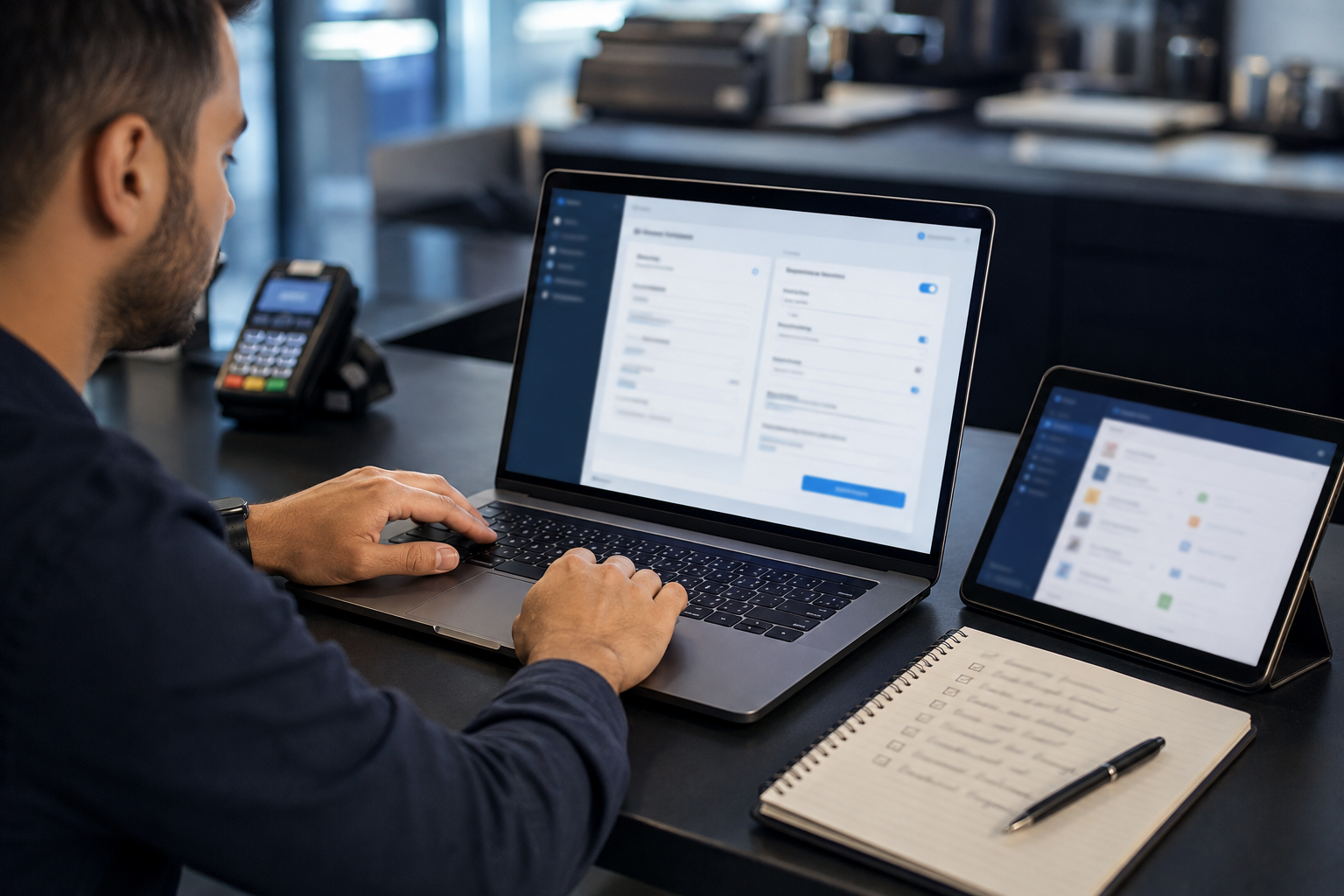
Payment Processors That Plug Into Your Existing POS (2026): Where Coastal Pay Fits In
If you are asking “Can I get a payment processor that integrates directly with my current POS?” – the answer is usually yes, if you pick the right partner. This guide shows you how to tell whether your POS is open to outside processors, where Coastal Pay’s 2,000+ integrations fit in, and what setup really looks like so you can switch without rebuilding your entire checkout.