




Coastal Pay | Payment Processor, Payment Gateway & 2000+ Software Integrations

WooCommerce Recurring Billing and Subscription Payments With Coastal Pay (2026 Complete Guide)

WooCommerce subscription stores have payment gateway requirements that go far beyond what a standard one-time transaction gateway provides. Card-on-file tokenization, configurable billing cycles, automated failed payment retry, card updater services, and ACH recurring billing are all critical infrastructure for a subscription WooCommerce store - because without them, involuntary churn from payment failures silently erodes MRR every month. This guide covers how Coastal Pay powers WooCommerce recurring billing at flat 2.5% + $0.15 with no separate subscription billing platform fee, and how the right dunning and card updater configuration can recover tens of thousands in annual MRR that would otherwise be lost to involuntary churn.

Share

Let’s Define What a WooCommerce Subscription Store Needs From Its Payment Gateway

WooCommerce subscription stores typically run WooCommerce Subscriptions (the Automattic plugin) or a compatible subscription management plugin. The subscription plugin manages billing cycles, subscriber accounts, plan changes, and subscriber-facing portals. The payment gateway handles the underlying card storage, recurring charge execution, and failed payment handling. When evaluating a gateway for WooCommerce subscriptions, five specific capabilities matter above everything else:

The Five Non-Negotiable Subscription Gateway Requirements

  • Card-on-file tokenization: The gateway must capture and store the subscriber’s card as an encrypted token after the first payment, so all subsequent billing cycles charge the token without requiring the subscriber to re-enter card details. If the gateway does not tokenize cards correctly, every subscription renewal requires the subscriber to actively provide payment – which is not a subscription, it is just a repeat payment request.
  • Automatic recurring charge execution via API: The WooCommerce Subscriptions plugin triggers the payment gateway API on each billing date to charge the stored token. The gateway must support this API-triggered charge pattern reliably. Any gateway instability on billing date charge processing directly impacts whether subscribers are charged correctly or generate false failures.
  • Dunning retry logic with configurable schedule: When a renewal charge fails, the gateway must retry automatically on a defined schedule (not immediately – smart retry timing recovers significantly more failures than immediate retry) and communicate with the subscriber between retries to prompt payment method updates. Effective dunning typically recovers 40% to 60% of initially failed subscription payments.
  • Card updater service: Visa Account Updater and Mastercard Automatic Billing Updater refresh stored card tokens before billing attempts when the underlying card has been replaced. WooCommerce subscription stores that do not have card updater coverage generate payment failures from card replacements that the subscriber never intended as a cancellation. Industry data suggests 15% to 25% of payment failures at subscription businesses are from card replacements preventable with card updater coverage.
  • ACH recurring billing: For WooCommerce subscription stores with B2B subscribers or high-value plans, ACH bank debit is dramatically cheaper than card and has no expiry date or replacement risk. ACH eliminates an entire class of payment failures that card billing is subject to.

Coastal Pay’s gateway supports all five requirements with no separate subscription billing platform fee on top of the 2.5% + $0.15 per-transaction rate.

Here’s How Coastal Pay Works With WooCommerce Subscriptions

WooCommerce Subscriptions (the plugin) manages the subscriber-facing experience: plan selection, billing cycle display, free trial periods, plan upgrades and downgrades, subscriber self-service portal, and WooCommerce order management for each renewal. Coastal Pay acts as the payment gateway behind it – executing each renewal charge, managing the card token vault, handling failed payments, and providing the API endpoints that WooCommerce Subscriptions calls on each billing date.

The Complete Subscription Billing Flow

  1. Customer visits your WooCommerce store and selects a subscription plan
  2. Customer adds the subscription product to cart and proceeds to WooCommerce checkout
  3. Customer enters payment details (card, Apple Pay, or ACH) on Coastal Pay’s hosted checkout fields – card details never touch your WordPress server
  4. First payment is authorized and charged. Coastal Pay tokenizes the payment method and stores the token against a customer profile in the Coastal Pay vault
  5. WooCommerce Subscriptions creates the subscription record linked to the WooCommerce customer account
  6. On each subsequent billing date, WooCommerce Subscriptions calls Coastal Pay’s API with the stored customer token and the renewal amount
  7. Coastal Pay charges the stored token. If the charge succeeds: WooCommerce creates a renewal order, the subscription status remains “Active,” and the subscriber receives a renewal receipt email
  8. If the charge fails: Coastal Pay returns a failure response with the specific decline reason code. WooCommerce Subscriptions updates the subscription status to “On hold.” Coastal Pay’s dunning sequence begins.

What the WooCommerce Subscriptions Plugin Handles vs What Coastal Pay Handles

FunctionWooCommerce Subscriptions PluginCoastal Pay Gateway
Subscription plan creation and displayYesNo
Billing cycle configurationYesSupported via API
Free trial managementYesSupports $0 initial charge authorization
Subscriber self-service portalYesNo (payment update via Coastal Pay link)
Card token storageNoYes – PCI-compliant vault
Recurring charge executionTriggers (calls Coastal Pay API)Executes (charges stored token)
Dunning retry logicStatus management (on hold, cancelled)Automated retry schedule and notifications
Card updater serviceNoYes – Visa AU and Mastercard ABU
ACH recurring billingSupports ACH via gatewayYes – flat per-item ACH rate
Settlement and payoutNoYes – 1 to 2 business days

The True Cost of Not Having Dunning on Your WooCommerce Subscriptions

Dunning management – the automated process of retrying failed charges and notifying subscribers – is not a nice-to-have feature for WooCommerce subscription stores. It is the difference between a subscription business that grows and one that quietly churns 20% to 40% of its subscriber base through payment failures that were never the subscriber’s intent.

The Involuntary Churn Math for WooCommerce Subscription Stores

A WooCommerce subscription store with 800 active subscribers at $49/month ($39,200 MRR) with a 3% monthly payment failure rate:

  • Monthly payment failures: 24 subscriptions at $49 = $1,176 at risk each month
  • Without dunning recovery: 24 subscriptions effectively cancelled = $1,176 MRR lost = $14,112 lost annually from involuntary churn alone
  • With effective dunning (55% recovery): 13 subscriptions recovered = $637 MRR saved per month = $7,644 recovered annually
  • With card updater (additional 20% prevention): 5 additional subscriptions never fail because the token was refreshed before the attempt = $245 MRR protected per month = $2,940 protected annually
  • Total MRR protected with dunning + card updater: $10,584/year

Coastal Pay’s Dunning Sequence for WooCommerce Subscriptions

When a WooCommerce subscription renewal charge fails on the billing date, Coastal Pay’s dunning sequence initiates automatically:

  • Day 1 (billing date): Charge attempt fails. Failure reason code is logged in the Coastal Pay dashboard. Automated email sent to subscriber at the email address on their WooCommerce account: “Your subscription renewal payment was not processed. Please update your payment method here: [secure Coastal Pay payment update link].” WooCommerce subscription status changes to “On hold.”
  • Day 3: Second charge attempt. Coastal Pay’s card updater service has had time to refresh any recently replaced or expired cards. Many failures from card replacements recover on Day 3 without any action from the subscriber.
  • Day 7: Third charge attempt. Second automated subscriber notification with more urgency: “Your subscription will be cancelled in 7 days if payment is not received. Update your payment method here: [link].”
  • Day 14: Fourth and final automated charge attempt. Final notification sent.
  • Day 15+: If all four attempts fail, the subscription status changes to “Cancelled” or “Past due” (depending on your WooCommerce Subscriptions configuration). You receive an alert in the Coastal Pay dashboard. At this point, a personal outreach from you to the subscriber is appropriate – referencing the four automated notifications and offering a direct path to resolve payment.

Contact 888-266-1715 to configure your specific dunning retry schedule and email notification language. Default settings are appropriate for most WooCommerce subscription businesses, but stores with specific subscriber relationships or premium tiers may want customized timing and messaging.

The Rate Advantage for WooCommerce Subscription Stores

Every monthly renewal charge carries a processing cost. The gateway you choose determines how much of your WooCommerce MRR goes to fees every month, permanently.

WooCommerce MRRSubscribersCoastal Pay Monthly Cost (2.5% + $0.15)Stripe Monthly Cost (2.9% + $0.30)Annual Savings vs Stripe
$10,000200$250 + $30 = $280$290 + $60 = $350$840/year
$30,000600$750 + $90 = $840$870 + $180 = $1,050$2,520/year
$75,0001,500$1,875 + $225 = $2,100$2,175 + $450 = $2,625$6,300/year
$150,0003,000$3,750 + $450 = $4,200$4,350 + $900 = $5,250$12,600/year

At $75,000 MRR, Coastal Pay saves $6,300/year versus Stripe – with the same dunning capabilities, card updater coverage, and WooCommerce Subscriptions compatibility. Coastal Pay also charges no subscription billing platform fee, unlike Stripe Billing’s advanced features (which carry a percentage-of-MRR fee for some feature tiers).

ACH Recurring Billing for WooCommerce B2B Subscription Stores

For WooCommerce subscription stores with B2B subscriber segments – SaaS companies billing business customers, membership programs with corporate accounts, service retainer subscriptions – ACH bank debit is the optimal default payment method. The cost advantage at B2B subscription amounts is dramatic, and ACH eliminates the entire card expiry and card replacement risk category.

Monthly Subscription AmountCard Renewal Cost (2.5% + $0.15)ACH Renewal Cost (flat per-item)Annual Savings Per Subscriber
$299/month$7.63~$1.50~$73.56/year
$499/month$12.63~$1.50~$133.56/year
$999/month$25.13~$1.50~$283.56/year
$2,500/month$62.65~$1.50~$733.80/year

A WooCommerce SaaS store with 50 business subscribers on a $499/month plan that migrates all 50 to ACH saves approximately $6,678/year in processing costs from ACH alone. No change to the WooCommerce product or pricing. No change to the subscriber’s experience. One configuration update in the Coastal Pay gateway to enable ACH and one enrollment campaign to migrate existing subscribers.

Explore Coastal Pay’s recurring billing gateway features, ACH recurring billing, and flat 2.5% + $0.15 with $0 platform fee.

Set Up WooCommerce Recurring Billing With Coastal Pay

Call for subscription billing setup: 888-266-1715

Frequently Asked Questions

How does WooCommerce recurring billing work with Coastal Pay?
Coastal Pay powers WooCommerce recurring billing through the WooCommerce Subscriptions plugin. After the first payment, Coastal Pay tokenizes the card and stores it securely. WooCommerce Subscriptions triggers the Coastal Pay API on each billing date to charge the stored token. Successful charges create renewal orders. Failed charges initiate automated dunning retry on day 3, 7, and 14 with subscriber notification emails.
Does Coastal Pay charge a platform fee for WooCommerce subscriptions?
No. Coastal Pay charges $0 separate subscription billing platform fee. Every renewal charge processes at flat 2.5% + $0.15. No percentage-of-MRR fee, no per-subscriber fee, no tier limits. At $75,000 MRR this saves $6,300/year versus Stripe.
What happens when a WooCommerce subscription payment fails?
Coastal Pay initiates automatic dunning: Day 1 subscriber notification with payment update link, Day 3 retry (card updater may have refreshed an expired token), Day 7 retry plus second notification, Day 14 final retry. If all fail, subscription moves to past due and you receive a dashboard alert. Contact 888-266-1715 to configure retry schedule and notification language.
Can I use ACH for WooCommerce subscription billing?
Yes. Coastal Pay bundles ACH in the same WooCommerce merchant account at a flat per-item rate. A $999/month subscription via ACH costs approximately $1.50/month versus $25.13 by card – saving approximately $283/year per subscriber. For 50 B2B subscribers on $499/month plans: ~$6,678/year saved by migrating to ACH. Contact 888-266-1715 to configure ACH recurring billing on your WooCommerce account.

How to Add Klarna and Afterpay to Your WooCommerce Store With Coastal Pay (BNPL 2026 Guide)

Buy-now-pay-later options at WooCommerce checkout are one of the most well-documented average order value and conversion rate improvements available to online stores. A customer who pauses at a $180 checkout often completes the purchase when Klarna shows “4 payments of $45.” The same customer with a $350 cart who might have removed an item may keep both items when Afterpay shows “4 payments of $87.50.” The merchant receives the full amount immediately. The BNPL provider bears the customer’s non-payment risk. The merchant’s only obligation: offer the option at checkout. This guide covers how to add both Klarna and Afterpay to your WooCommerce store through Coastal Pay’s single plugin – no separate BNPL agreements, no extra monthly fees, and no developer required.

How to Reduce WooCommerce Payment Processing Fees (8 Proven Strategies With Coastal Pay)

Payment processing fees on a WooCommerce store scale directly with revenue – every dollar you earn has a percentage going to your processor. Unlike rent or payroll (which are relatively fixed), processing fees compound proportionally with growth: the more successful your store becomes, the more you pay. Reducing your WooCommerce effective processing rate is one of the highest-leverage margin improvements available because the savings apply to every future transaction, permanently. This guide covers eight specific, actionable strategies to reduce what your WooCommerce store pays in processing fees, using Coastal Pay’s flat 2.5% + $0.15 with $0 gateway fee as the benchmark for every comparison.
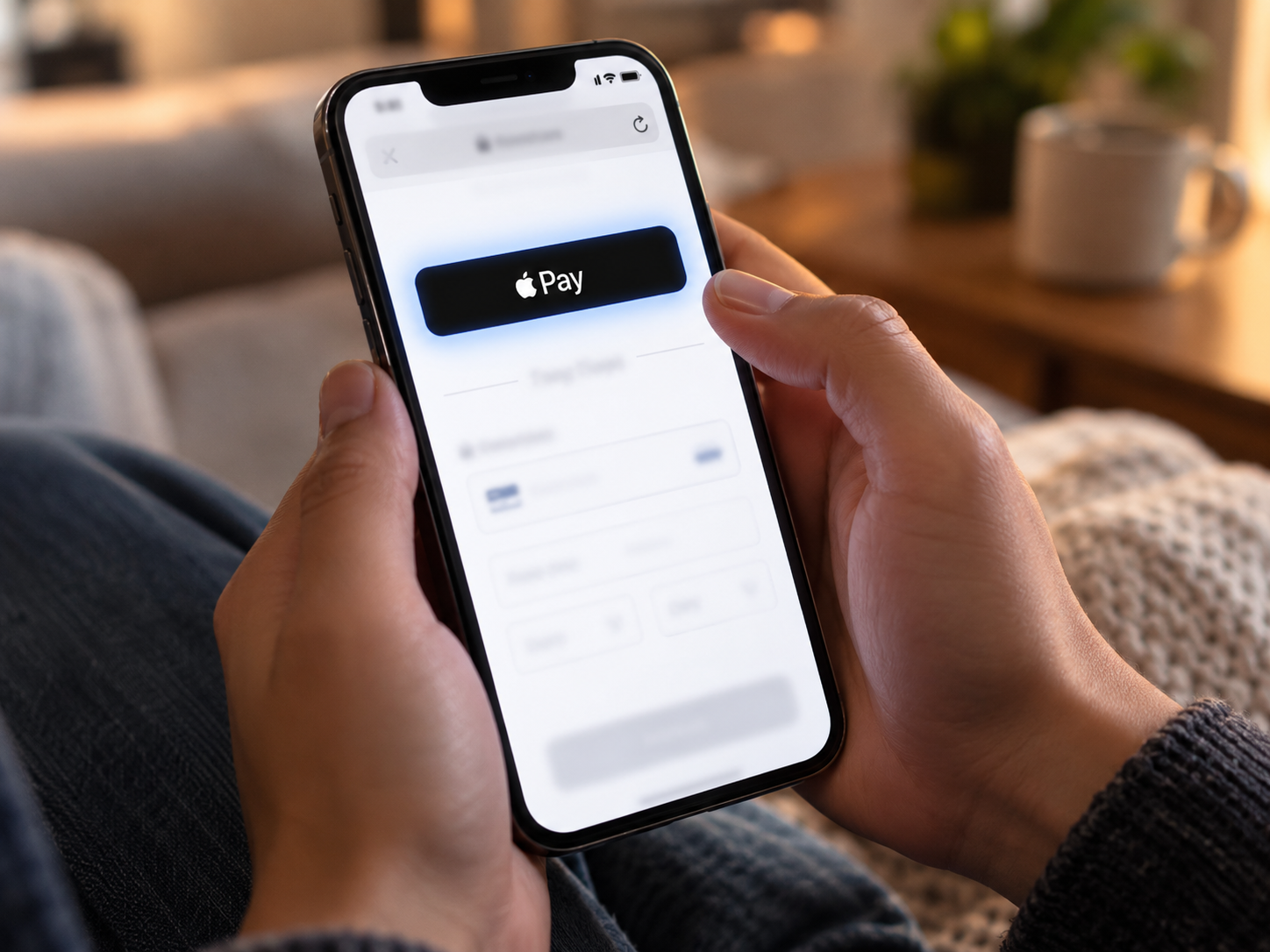
How to Add Apple Pay and Google Pay to Your WooCommerce Store With Coastal Pay

More than 60% of WooCommerce traffic arrives on mobile devices. Customers shopping on iPhones expect to see an Apple Pay button at checkout. Customers on Android devices expect Google Pay. When these options are missing, a significant percentage of mobile customers abandon rather than type a 16-digit card number, expiry date, CVV, and billing address into a phone keyboard. This guide covers exactly how to add both Apple Pay and Google Pay to your WooCommerce store using Coastal Pay’s plugin – including every technical requirement, the domain verification step that trips up most first-time setups, and why the checkout speed difference between card entry and Apple Pay is one of the most measurable mobile conversion improvements available to WooCommerce store owners.
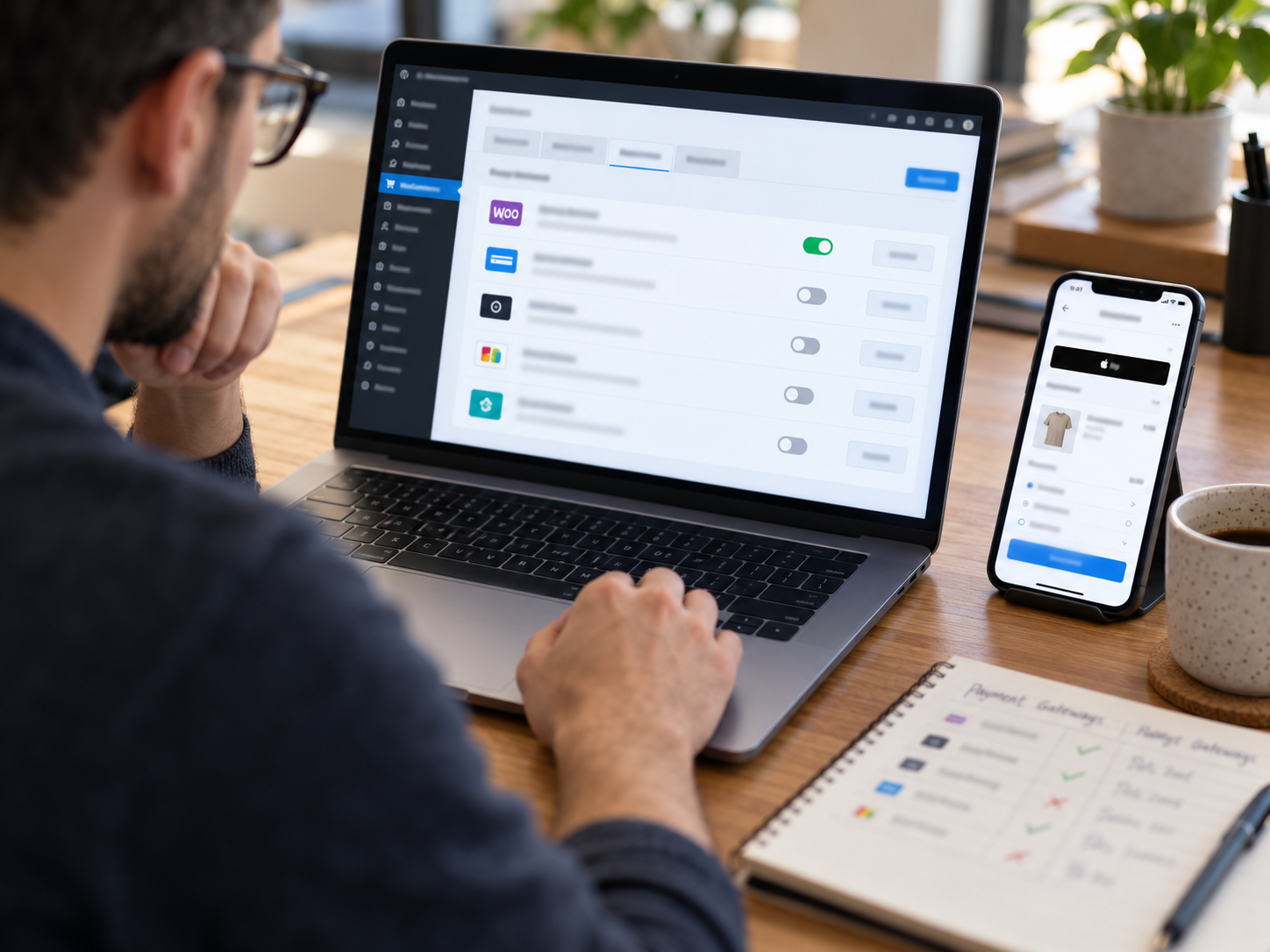
Best WooCommerce Payment Gateways in 2026: Stripe, PayPal, Square & Coastal Pay Compared

WooCommerce gives store owners genuine freedom to choose their payment gateway – unlike hosted platforms that lock you into proprietary payment systems. That freedom is only valuable if you know which gateway to choose and why. In this 2026 comparison we evaluate Stripe, PayPal, Square, and Coastal Pay across every dimension that matters for WooCommerce stores: all-in processing cost, plugin quality, Apple Pay and Google Pay support, BNPL availability, ACH, account stability, and annual cost at three realistic WooCommerce store volumes. Every number in this guide is calculated, not quoted – so you see what you would actually pay, not what a pricing page says.

Search